The War of Art
You have to fight against your worst ememy to be a great artist - yourself.
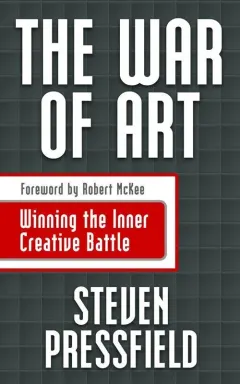
Review
Even though I have been working as a software engineer, I’ve always daydreamed about becoming some kind of artist someday. I’ve also tried to express my artistic side by building and writing drafts and prototypes, but I never actually finished or published any of them. I didn’t think it was a big problem since it’s just a hobby, but I couldn’t explain why I always felt a little sad about not giving myself the chance to reach the next level I was looking for.
Then one day I was watching a YouTube video with advice from a successful music producer, and he recommended this book. I searched for it, and since it seemed like a short read, I decided to give it a shot and try to finish it in half a day.
After reading this book, I have mixed feelings about it. First of all, it’s a book I would definitely recommend to people who want to become great artists but don’t know what’s holding them back. That said, I’d also give them a word of caution: the book explains its core concept through a rather “religious” theme, which I’m pretty sure some people could hate.
Still, the core idea the author tries to convey is simple yet effective. It feels like The Creative Act (by Rick Rubin) and Solving the Procrastination Puzzle (by Timothy A. Pychyl) had a baby.
Reading Notes
Every potential artist faces their own “resistance,” a force that will attempt to prevent them from achieving greatness and won’t cease even after they’ve become one. “Self-rationalization” is one of the strongest servants of this resistance.
True professionals, however, operate with a deliberate and focused approach:
- They are warriors – you must fight this resistance every day.
- They are always prepared. Professionals don’t make excuses; they make preparations.
- They don’t take failure personally; it’s simply a lesson learned.
- They don’t hesitate to seek out inspiration, and that “coach” doesn’t necessarily need to possess superior skills.
- They dedicate significant time to polishing and researching their skills and techniques, preparing themselves to use inspiration fluently when it arises—they don’t wait for spontaneous inspiration.
The “muse” – a guardian angel for one’s artistic fate – is willing to offer assistance to those who are well-prepared.
Create your own “sanctuary,” a space where you can maximize your skill and creativity.
Ironically, one of the biggest obstacles to achieving greatness is the “fear of being great.” This fear is rooted in a long-standing human instinct; historically, special individuals were often ostracized from tribes due to their differences and unpredictability [^1].
Remember these two key principles:
- Just start. Once you begin, you’ll feel a sense of momentum and accomplishment.
- 99% completion is the same as 0% completion. Finish your work.