The Timeless Way of Building
An immutable way of building spaces, buildings and towns that would make people feel "it's just right"
Reading notes
Chapter 1. The timeless way
- The difference between good and bad buildings/towns aren’t subjective - they are objective.
- There is one way that a building or a town can actually be brought to life.
- This method cannot be used mechanically
- This method free us from all other methods.
- Each one of us has, somewhere in his/her heart, the dream to make a living world, a universe.
Chapter 2. The quality without a name
- There’s a fundamental quality that is required for timeless way of building.
- But this quality cannot be named - yet it has the following traits:
- It’s alive
- It’s wholesome
- It makes you feel comfortable
- It brings freedom
- It’s exact
- It’s egoless
- It’s eternal
Chapter 3. Being alive
- add notes…
Chapter 4. Patterns of events
- The life/experience/soul of a place depend not only on the physical environment, but also on the patterns of events which happens there.
- ex) London - a gloomy street, a friendly pub, a church.
- ex) Gangnam in Seoul - always crowded, sky high buildings, the nearest gate to Seoul for people from south
- The standard patterns of events vary from person to person, and from culture to culture
- One cannot think the place and events separately
- ex) Kitchen -> Cooking, washing dishes, etc
Chapter 5. Patterns of space
- A large part of structure of a building/town consists of patterns of relationships.
- Relationships aren’t attached to the elements - the elements themselves “are” patterns of relationships.
- Pattern of space does not “cause” the pattern of events, neither does the pattern of events “cause” the pattern of space.
- They are invented and evolved together, by people’s culture.
- Patterns get repeated from various buildings/towns - but buildings/towns get their own character due to differences in details.
- Patterns used to consist buildings/towns aren’t that many as we think.
Chapter 6: Patterns which are alive
Chapter 18: The genetic power of language
- An organism is a constant flux of processes.
- A town or building also is a constant flux of processes.
- Each building/town has it’s own problem - they have their own language to solve that problem.
- A language is composed with various patterns that can solve divided sub-problems:
- ex) A language for repairing common land inside a neighborhood:
- Activity Nodes
- Network of Paths and Cars
- Green Streets
- …
- ex) A language for repairing common land inside a neighborhood:
- Every act of building, brings a handful of patterns into existence.
- Each language, which is composed with smaller patterns, pulls other larger patterns.
- Just like organisms, which cells cooperate to form organs and the body as a whole, the society is a cooperative result from each individuals’ actions.
Chapter 19: Differentiating Space
- One cannot build an alive building from preformed components
- Just like the growth of an embryo, the living space should “grow with differentiation”.
- This process of design is often called “unfolding”.
- Each pattern is an operator which differentiates space.
- A language is a sequence of these operators.
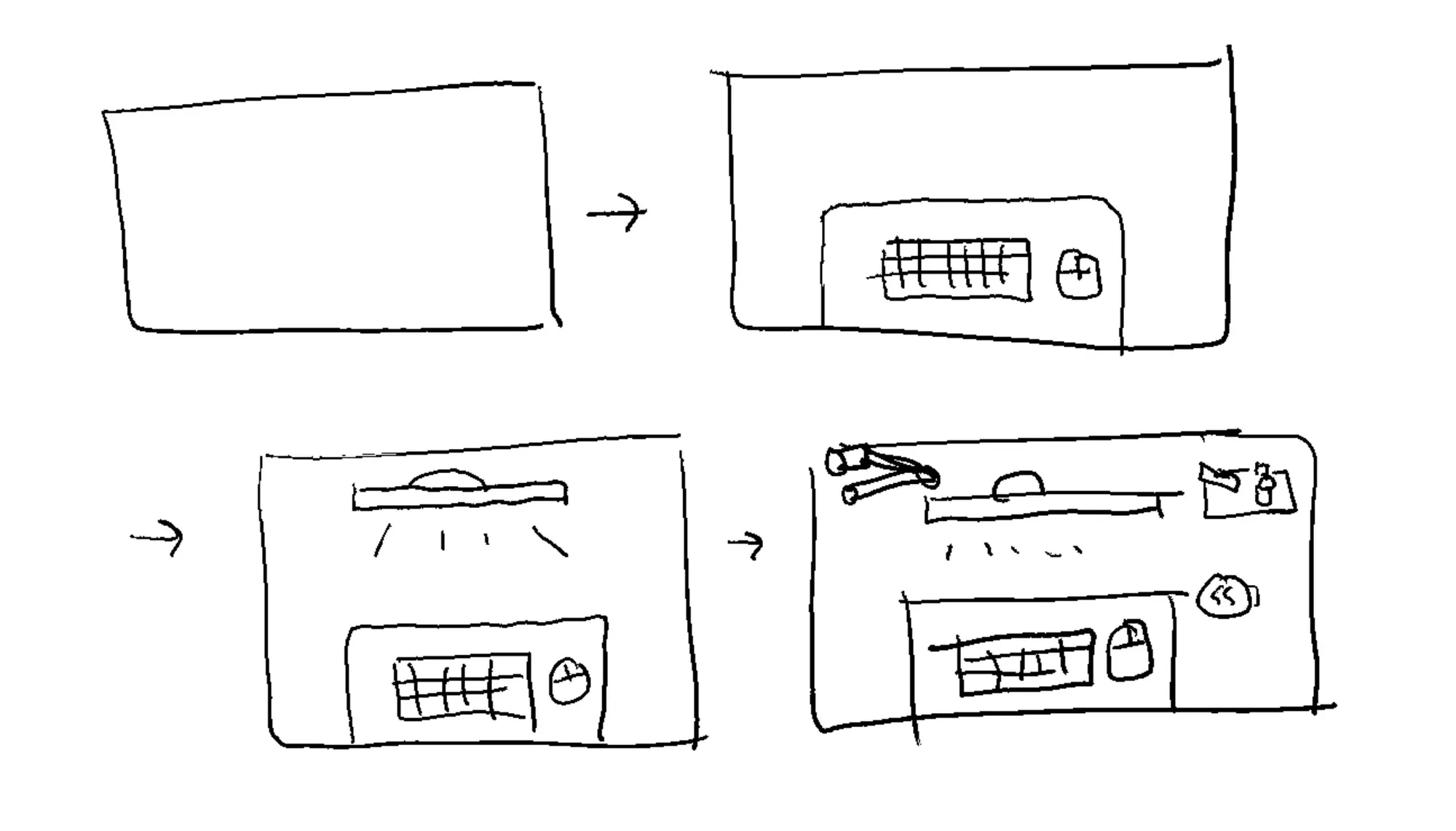
- The process of differentiation works well, only if we set the patterns in a language in right sequence.
- 3 rules for ordering the patterns
- Higher level pattern should appear & considered before lower level pattern.
- ex) Since “sitting room” pattern includes “alcove” pattern, it should be considered before “alcove” pattern when we start designing.
- The patterns using a same pattern should be placed close together.
- The patterns which is used by a same pattern should be placed close together.